Playing Hard Report
The process on how products go from conception to completion takes a long time and a lot of planning. The conception has multiple stages, the first is getting the idea and seeing if the game would be fun in the first place. They made a very simple melee combat system that didn’t have any models apart from a sword and a stick man figure. This gave them a good idea if the game would be interesting and if it would be possible to create. Only 40 people were working on the game at the time as there was no real dedication as the game was still just a concept and wasn’t in full development but once they got permission to make the game, the team grew to 400-600 people.
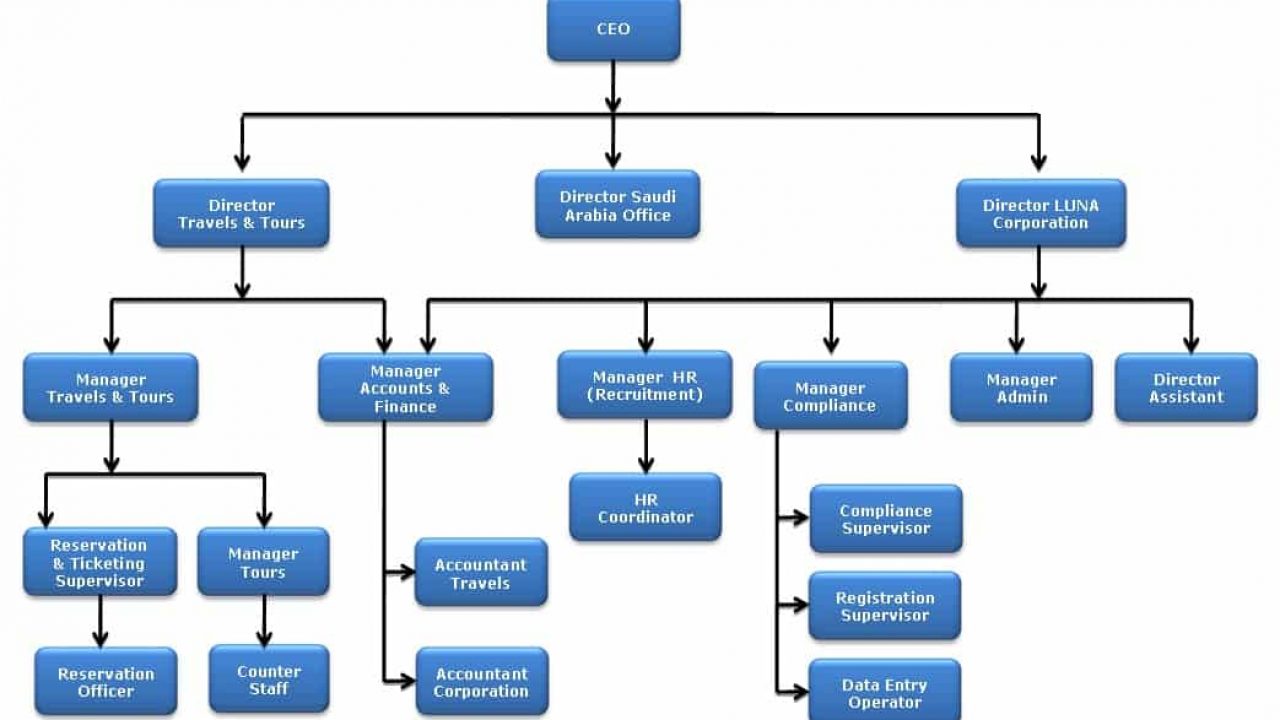
Job Roles and Hierarchies
Games
Programmers / Movement/ Ai / Environment/ Physics/ Audio/ Inventory
Testers / community/ bug/
Level Design / Environment/
Community Manger
Artist 2D/3D/UI/GUI
Animator / Character/ Vehicles/
Modelling
Documenter
Animation
Research
Rigger
Modelling – Character / Particle /
Programmer
Motion Graphics
VFX
Artist 3D/2D
Renderer
Viewer
Story boarder
Layout TD
Concept Artist
Modeler
Texture Artist
Rigging TD
Animator
FX TD
Rendering TD
Compositor
Roto Artist
Matchmover
Matte Painter
Pipeline TD
CG Supervisor
VFX Supervisor
AOTAB
Director / main / sub
Marketing
Producer
Publisher
Concepting
Sound
Lighting
I am most interested in working in the game section of the course; I would like to do 3d modelling specifically as I find it the most interesting. I would also like to look into game testing as that it allows me to look on the different types of bugs that games have and why they have it.
Quality Assurance
Quality assurance managers play a crucial role in business by ensuring that products meet certain thresholds of acceptability. They plan, direct or coordinate quality assurance programs and formulate quality control policies. They also work to improve an organization’s efficiency and profitability by reducing waste.
One thing they do is analyse data so they can make recommendations to the company on how they can improve their production. This helps reduce the number of defects and improve levels of quality.
Producer
A producer is either employed by a production company or working independently. Producers mainly plan and put together different aspects of a film/project. A film producer will normally select the script, directing, editing and arrange the finances. They will also oversee the marketing and distribution.
CEO/Company Owner
Junior Animator
The Junior animator is where most animators will start and the salary is the lowest. This could be where they are still learning how the business works and runs.
Animator
An Animator is the normal job where the pay is increased and the work is more fluent. This is the role after the junior animator
Senior Animator
The Senior Animator still animates but they also help the junior animator learn how the business works. They will help the junior animator more.
Art Manager
The Art Manager is has the role of reporting and leading their area. Any problems that the group/team has, they will report it back to the project director and they can look at it from a wide perspective.
Project Director
The project director communicates with the every team to see where everyone is at. They look at everything and make sure that the project is on time to hit deadlines.
World Building
The game we are creating is called Project Artimus and it is set in the future where a cyborg has crash landed into a planet called Artimus. His goal is to collect metal scraps that is on the island and he faces enemies on the way. He has glass powers that allows him to defend himself from the evil on the planet.
Our current world for our imagined world contains 3 different environments; the first environment consists of trees and colour. It’s a forested area with stationary enemies so the player doesn’t die instantly. The second environment is a cave with very little lighting and a gloomier area overall. The enemies will be more deadly so that the player can progress in their combat. The final area is full of fire and the most dangerous enemies. There will be fire breathing enemies and this makes the game progress and gets harder and harder.
The history of the world can impact how the current state of massively. If something destroyed the world previously (such as a war), it could affect the rebuilding of the world or how the world runs currently. It could change how and what the player knows and understands about the world.
We know a lot about real life events and that makes it easy to build around the event. For example, when wars were happening, there was a lot of death and it would have cost a lot of money. This can create a scene that would show how and what effected it so much.
Potential setting of our world
-heat source in space that he was sent to investigate
-Going to collect more gems from other planet to power cyborgs core
Setting
To create a setting, you need a place and time + conflict. You can create a place then add time and conflict or you can do it the other way around.

Free Design
Free design consists of blocking out core ideas for the game. This is informed by research about the specific time/Era. With free design, it gives you the freedom to change and shape the environment to however you want it.
Fixed Design
Fixed design has to follow the needs of a game such as helping someone with something in an event. This also relies on the state of the world such as time period and what technology they had.
Found Design
Target Audience
The target audience are the group of people that a product aims to appeal and please. The main one is age as that is promoted on the box, however, age probably affects whether someone plays a game the least. Things such as if the game is single player or multiplayer would be a big decider for most people as some people don’t enjoy the single player parts of the games. This leads onto whether the game is competitive: if the game has multiplayer ranking systems, the game is probably competitive and a lot of people enjoy trying to be the best at the game.

PEGI
https://pegi.info/page/pegi-organisation
PEGI is the company that puts age ratings onto video games. They have their company in 35 European country’s so they manage a lot throughout each platform.
Using the traditional method of pre-release verification:
- all the games on disc for Microsoft Xbox consoles
- all the games (download and boxed) for Sony PlayStation consoles and Sony PlayStation VITA
- all the games on disc or cartridge for Nintendo Wii U and Nintendo 3DS
- most PC games (download and boxed)
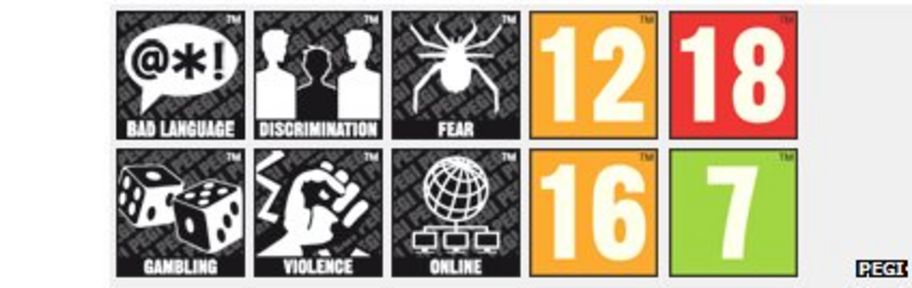
The IARC system is currently used for:
- all games and apps on Google Play (for Android devices, since Spring 2015)
- all games and apps on the Microsoft Windows Store (for Windows PCs, smartphones and tablets, since December 2015)
- all games and apps on the Nintendo eShop (since December 2015)
- all games and apps on the Oculus VR Store (since January 2017)
ESRB
ESRB is the american version of PEGI. This seems to be targeted towards the parents more then PEGI as it seems to include parental controls that let you block certain apps.
They say “Our rating system was established with the help of child development and academic experts, based on an analysis of other rating systems and what parents need from an effective rating system” Although their goals are similar to PEGI, they seem to try and give advice to parents.
PEGI and ESRB impacts products quite a bit as it could effect sales and it could cost a company more to make sure they meet the guidelines. If a company wants to publish a game to a certain age range, they have to meet the requirements otherwise it could get a higher rating and look worse then it actually is.

Market Research
The GDC video shows how in-depth you can go into market research and the benefits of doing your research. Market research can help you predetermine whether your product will make money (in most cases) before you even make it. It can help see trends and the demand for each type of game which can help the company to see if the product is worth making.
Market research is almost like a learning process; it can teach companies how to save and make money. It can tell the company what type of game they should release, what platform, the price they should charge, how competitive the market is and so on…
For the most part, the trends are pretty accurate however sometimes there are anomalies such as game genres that would normally make little money will make loads. It could be due to the art style or mechanics or even a bit of luck.
Production Management: Agile & Scrum
Agile is a time boxed, iterative approach to software delivery that builds software incrementally from the start of the project, instead of trying to deliver it all at once near the end.
By doing this it allows changes throughout the creation of the product. If it was all planned first, changes could not be made once the production had started.
Agile is a process that helps teams provide quick and unpredictable responses to the feedback they receive on their project. It creates opportunities to assess a project’s direction during the development cycle. Teams assess the project in regular meetings called sprints or iterations.

https://www.smartsheet.com/comprehensive-guide-values-principles-agile-manifesto
- Customer satisfaction through early and continuous software delivery – Customers are happier when they receive working software at regular intervals, rather than waiting extended periods of time between releases.
- Accommodate changing requirements throughout the development process – The ability to avoid delays when a requirement or feature request changes.
- Frequent delivery of working software – Scrum accommodates this principle since the team operates in software sprints or iterations that ensure regular delivery of working software.
- Collaboration between the business stakeholders and developers throughout the project – Better decisions are made when the business and technical team are aligned.
- Support, trust, and motivate the people involved – Motivated teams are more likely to deliver their best work than unhappy teams.
- Enable face-to-face interactions – Communication is more successful when development teams are co-located.
- Working software is the primary measure of progress – Delivering functional software to the customer is the ultimate factor that measures progress.
- Agile processes to support a consistent development pace – Teams establish a repeatable and maintainable speed at which they can deliver working software, and they repeat it with each release.
- Attention to technical detail and design enhances agility – The right skills and good design ensures the team can maintain the pace, constantly improve the product, and sustain change.
- Simplicity – Develop just enough to get the job done for right now.
- Self-organizing teams encourage great architectures, requirements, and designs – Skilled and motivated team members who have decision-making power, take ownership, communicate regularly with other team members, and share ideas that deliver quality products.
- Regular reflections on how to become more effective – Self-improvement, process improvement, advancing skills, and techniques help team members work more efficiently.
Scrum
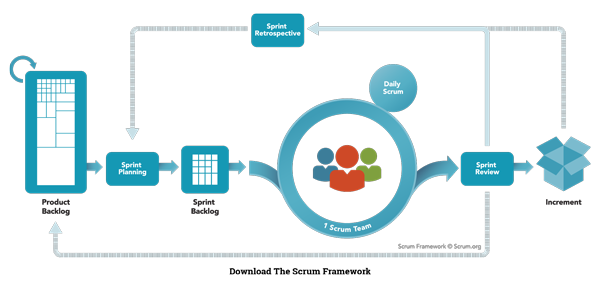
Scrum is a framework that helps teams work together. Much like a rugby team (where it gets its name) training for the big game, Scrum encourages teams to learn through experiences, self-organize while working on a problem, and reflect on their wins and losses to continuously improve.
As described in the Scrum Guide, a Sprint, a time-box of one month or less during which a “Done”, usable, and potentially releasable product Increment is created. Sprints have consistent duration’s throughout a development effort. A new Sprint starts immediately after the conclusion of the previous Sprint.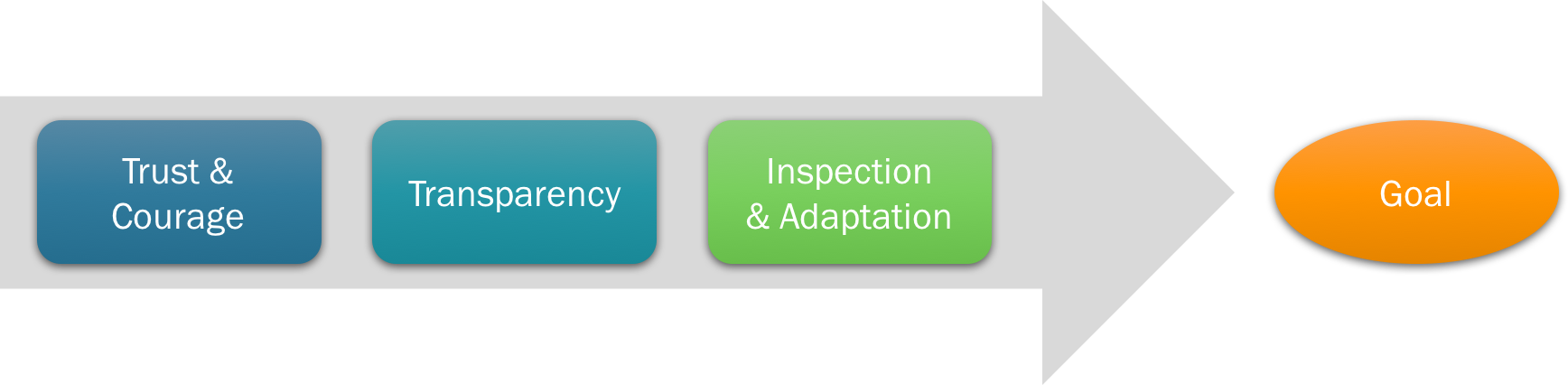
The waterfall method is when the company does each section all at once instead of separating and working in sections. The waterfall method means that anything that is not in the planning will not make it into the product and nothing will be changed. The scrum allows changes throughout the products creation as long as there is a minimal viable product.
Case Study Exam Preparation Self Reflection
To improve my blog, I need to add more images to illustrate what each specific topic means so it is easier to revise for the exam. I could also add more detail to my blog outside of college to broaden my knowledge of each topic.
You are a producer working for a large Nintendo Switch games development company. You would like to develop a new adventure game.
Discuss the processes you would undertake to ensure that the product is viable and what recommendations you may make to ensure that it is.
Discuss and make recommendations for what will be important for the preproduction process and why.
What recommendations would you make to ensure team productivity is high and deadlines are met?
How developers create an immersive experience for audiences
GAVFX products use many tactics to immerse the audience. A few of them are Sound, VFX, satisfaction etc. Sound is a key component to immersing a player as with no sound the player could not know what’s happening within a scene. Sound is used to give the player information about where they are in a game. If the player was on top of a mountain, it would probably be windy with snow crunching under their feet. They all tie together to create a feeling that the player can imagine being in the scene. Sound is important because it’s around 50% of the players info on what is happening so they need it to understand fully what they are doing. It also brings the scene to life as hearing the environment immerses you, as the player.
Another main component is how satisfying the game is to play and interact with. For example, a game such as god of war has little components in their combat system that it makes it so satisfying when you are fighting enemies. The screen shakes a little, the attacks feel heavy so when they connect it feels like you actually done some damage and the way the enemy reacts when you hit them shows the player that they are hurt.
There are 3 senses that immerse a player, sight, hearing and feeling. Seeing and hearing the game kind of goes together as they need each other to work effectively. Without sound, the game feels dead, without visually seeing the game you don’t know whats happening. Feeling however is separate as the world and objects need to be intractable. Rumbling of the controller is a good example as it can inform the player what is happening as long as the rumbling stays consistent throughout the game. VR is also a good sense as although you can not actually feel the world, the controllers make it feel like you can by the input they give.
Sound can be created in many ways; from using weird objects to create noise then layering them to getting a sample of a real thing such as a gun shooting and trying to relocate it in hyper-realism. For example, if the gunshot was not changed it would sound weird and not like it’s in a game whereas hyper realism may make the travel of the bullet sound longer and the initial crack of the bullet to be longer and boosted.
Touch and feel can help with immersion as it allows the player to feel like they are there and can somewhat relate to the situation. If a game feels slow it could make the immersion wear off unless it is intentionally slow and works well.
Mini Mock Feedback Reflection
I think question 3 was my weakest question as this talked more about business and income. I could have expanded my answers an the publishers and revenue shares. I think I could have talked about how the publishers expect a game to be at certain time and how deadlines are so important to publishers due to their advertising.
Publishers and revenue shares
Gross Income vs. Net Income
Revenue share agreements will specify between sharing Gross Income or Net Income.
- We recommend going with Gross Income whenever possible.
- Net Income allows publishers to pay themselves back first for whatever expenses they deem necessary
- For instance a publisher may try to deduct expenses like marketing, or localization costs, before paying out the developer
- Gross Income will be the split payment after the distributor’s share (Valve, Nintendo, etc.), but won’t include other miscellaneous expenses incurred
- Net Income allows publishers to pay themselves back first for whatever expenses they deem necessary
Share Percentages
- The more effort and cost required from the publisher, the larger of a percentage they’ll ask for.
- Especially in the case of lending money, publishers will usually have a higher rev-share percentage they receive pre-recoupment, and then drop down to a more standard rate after that.
- The rev-share amount may be different per each platform, for instance if a publisher handles all the porting costs and management for Nintendo Switch – they may receive a larger percentage on that platform.
Other Elements
- Occasionally publishers will ask for things such as IP ownership.
- Our opinion is to never sell IP, unless it is an insanely fantastic deal (lots of $$$).
- A publisher may also ask for right of first refusal for future platforms
- Think carefully if you want to commit to terms like these, and whether they would have a long-term positive or negative impact for your project.
Ratings
You will often need a rating for the various regions around the world you’re releasing.
- The publisher can handle the management and cost for these regions, which include:
- ESRB (America)
- PEGI (Europe)
- CERO (Japan)
- USK (Germany)
Mock Reflection
I got a high pass in my exam which is lower then I wanted but I expected it as I was sick on the day. I think I can get a merit on the day of the real exam and that is what I am aiming to achieve.
The first half of the exam went well. The market was probably my strongest part of the exam as I am quite aware of current markets and how things are effect the market. I think I need go more in depth when writing about topics.
Weak point The production process
Taking the scenario a step further, Microsoft contracts the studio to develop the sequel.
Set out the processes the Studio must follow to develop the sequel, identifying:
- the research to be undertaken
- the people and roles involved
- the documentation that would be created
- where problems would arise
Pre-production is the time to think what kind of game you want to make, and plan how will you make it. The development team is very lean in pre-production, consisting mostly of the different discipline’s leads and a producer. This core team will decide the theme, art style, level design, game mechanics, story elements, and technology. The different leads will proceed to estimate what is going to cost to put all of this together, regarding people and money. Meanwhile, the producer will work with the leads to document game design decision, roadmap all the necessary work and note down any potential risk.
Production is where most of the game is made; the expanded development team becomes an industrial production line churning out art assets, level and character models and game code.
The producers play a significant role in production to ensure the game is fun and is not being bogged down by features that are either unnecessary, unfun or that pose a schedule risk for the project. This is easier said than done; the temptation to squeeze in a new mechanic can come from everywhere at any time – say a weekend gaming session. However, adding a new mechanic or changing an existing mechanic mid-production, can be incredibly risky and wasteful. Hundreds of previously created assets might need to be thrown away to account for the changes. As an example, imagine adding the ability to fly to an action RPG game, some of the levels and encounters might become trivial and require a complete rework, existing 3d models might also need improvements as the artists did not expect the camera to see the top of certain objects.
In Post-production, most of the development team starts to leave and QA steps in. The objective is to polish the game and make it as stable and bug-free as possible.
The game at Alpha testing is called feature complete, all the game mechanics are locked down, but designers can still tune values and artists improve or create new assets. QA and the engineers start to hunt bugs proactively. As the game becomes more stable the leads begin to lock down entire sections of the game; the game enters Beta testing when all the game content is locked down.
In Beta, the development team is only allowed to fix bugs and optimize assets and code for performance. QA has the final say whether the game is ready to be shipped, this decision is based on the type and number of bugs remaining.
Bugs are categorized into one these three classes: Class A (Game crashes), Class B (Noticeable gameplay or graphical errors), and Class C (all others). For a game to be considered in a releasable state it must have no Class A and Class B errors – sometimes QA will allow the game to launch with some Class B errors, on the condition that a patch to fix them will be coming soon.
Console releases must pass Certification by the console manufacturer before launch. This is an extensive test of the game on the console hardware. The game can technically be resubmitted if it fails the certification process, but the financial risk of failing the test is so big that the big publishers have in-house teams to do a Precertification. This bears repeating, failing Certification is so bad that publishers will have people on hand whose only job is to do a mock certification test before sending it to the console manufacturer. Not only is the test expensive on its own, but we also must factor the cost of delaying launch for months!
Merit/Distinction
You’ve got a really strong knowledge and understanding of this question now, the level of detail gone into, boasts distinction level understanding. However, some parts of your answer repeats information that could be shortened down to save time better spent on other parts of your answer. To improve this further you could follow the point, evidence, analysis paragraph structure to avoid repeating the same information, talk about how this may effect the company.
Pressure points
Sharing Revenue
Job Roles and Interactions
Freelance
TO get a freelance job, you would show your portfolio to a company to try and get a job on a project. You would specialize in your strong points and what you promoted in your portfolio. You would work with people within your project from home and communicate online. They could use a program such as discord to communicate as they can type and talk in real time. An advantage is that you are your own boss and you can control how much work you can do, however, this can be a disadvantage as being a boss can he tough and requires good management skills. You also get paid in full for your work, assuming the employer is willing to pay.
Full Time
Temporary Contract
The concept artist creates a base design of the environment and models so that the 3d artist has a reference when it comes to modelling, the more detail the concept artist can provide makes it clearer for the 3d modeler to create his vision of the model.
The programmer interacts with the game designer by the game designer illustrates the mechanics they want added and the programmer creates the code for it, the game designer can also tell the programmer what is more prioritised
The 3d modeller provides the animator with the model ready to rig, the 3d modeller should insure that the model is designed in a way that is easy for the animator to use.
The animators and programmers have to communicate when a animation has to be played it can go from a simple walk animations to a more in depth animations, for example pressing certain keys may activate certain combos.
 Daniel Porter